
Cranes & Heavy-Duty Homologation

For cranes, mobile machinery and heavy-duty special vehicles, machinery law, product compliance and road-use requirements meet directly. That is exactly the interface we work on.
Regulation (EU) 2025/14 creates the EU framework for non-road mobile machinery circulating on public roads.
Thinking road and machine at the same time
In heavy-duty machinery projects, it is not enough to look only at the machine function or only at public-road use. What is needed is a combined view of technical safety, product compliance, road-use requirements and documented evidence. That is where many projects become unnecessarily complex — and where we provide clarity.
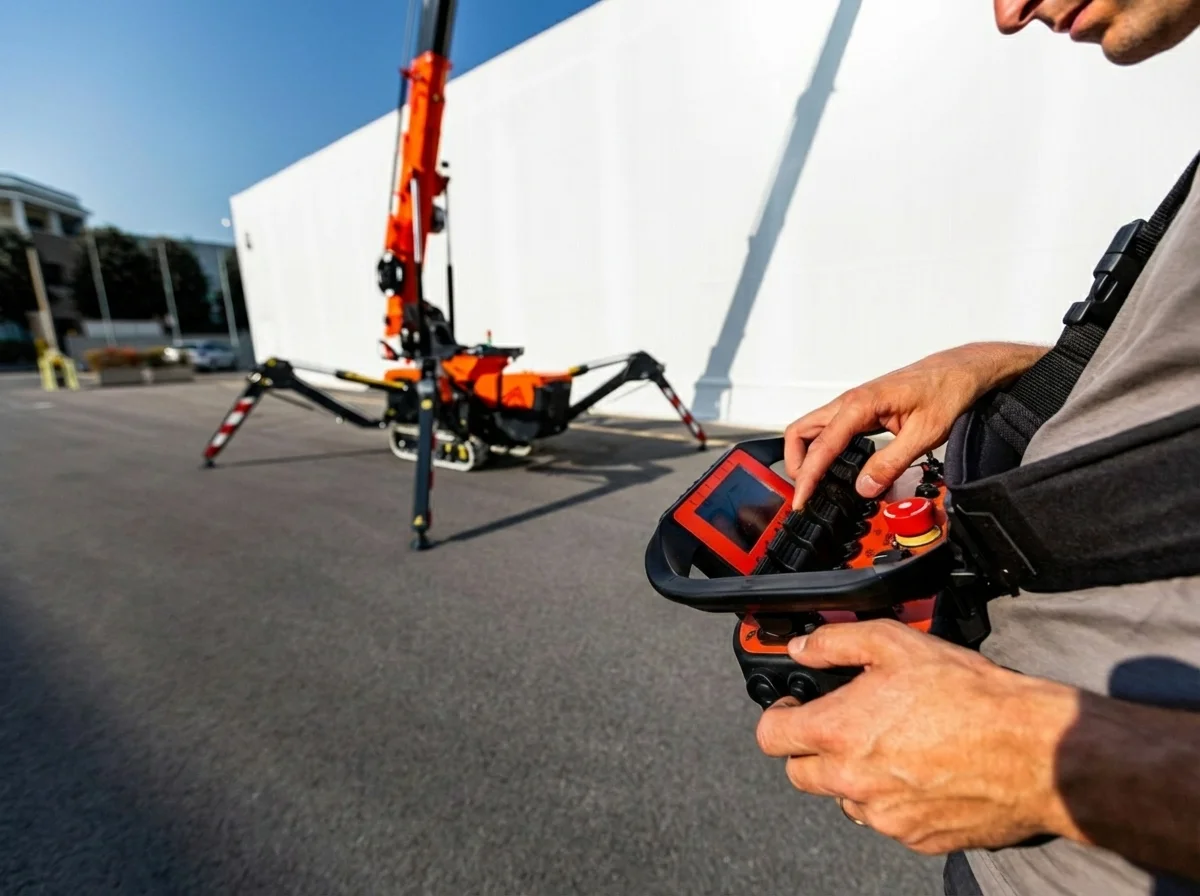
We determine which regulatory framework applies to the machine, the road-use scenario and the intended market placement.
We structure the requirements for safety, road-relevant functions and approval-relevant documentation.
We coordinate technical proof, test routes and interfaces with technical services.
We build robust records for approval, conformity and internal release processes.
We support the move into a stable market and operating framework, including later changes and developments.
Depending on the product and use case, both can matter. That is exactly why early classification is critical.
Yes. It applies from 29 January 2028, but it already allows national authorities to grant EU type approvals and EU individual approvals from 28 January 2025.
Yes. These cases in particular require a clean regulatory classification before technical measures are implemented.
Failing to distinguish early between machine function, road circulation and documentary proof logic.